Natural Paradise Yacht: Route A (Tuesday - Tuesday)
Overview
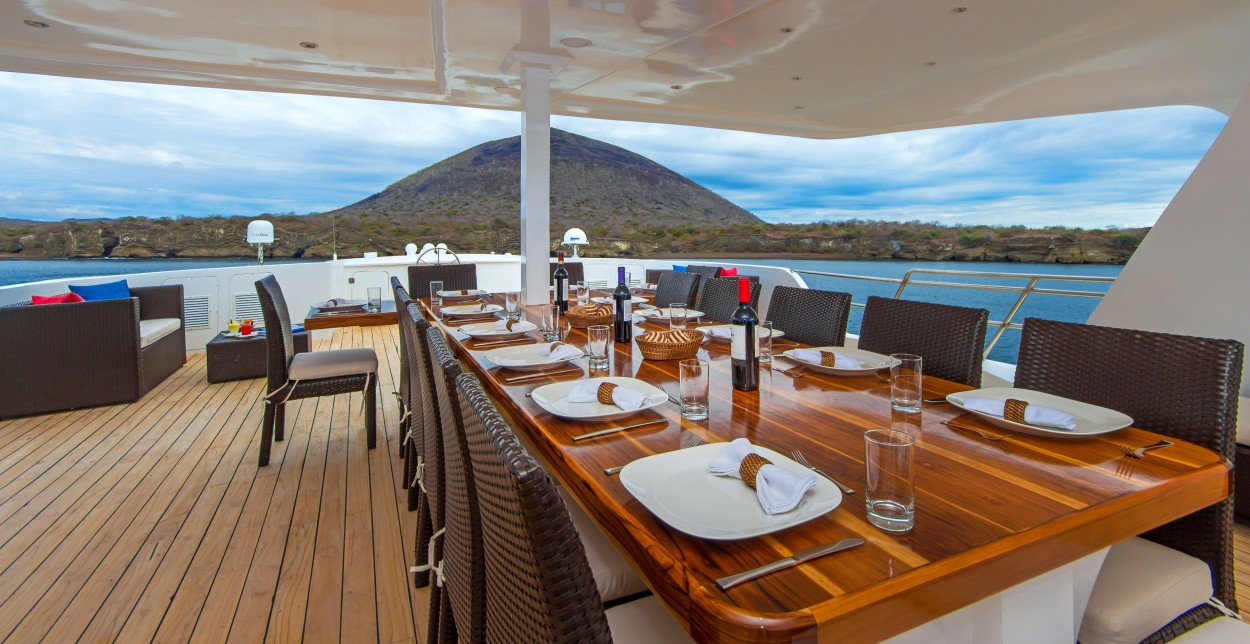
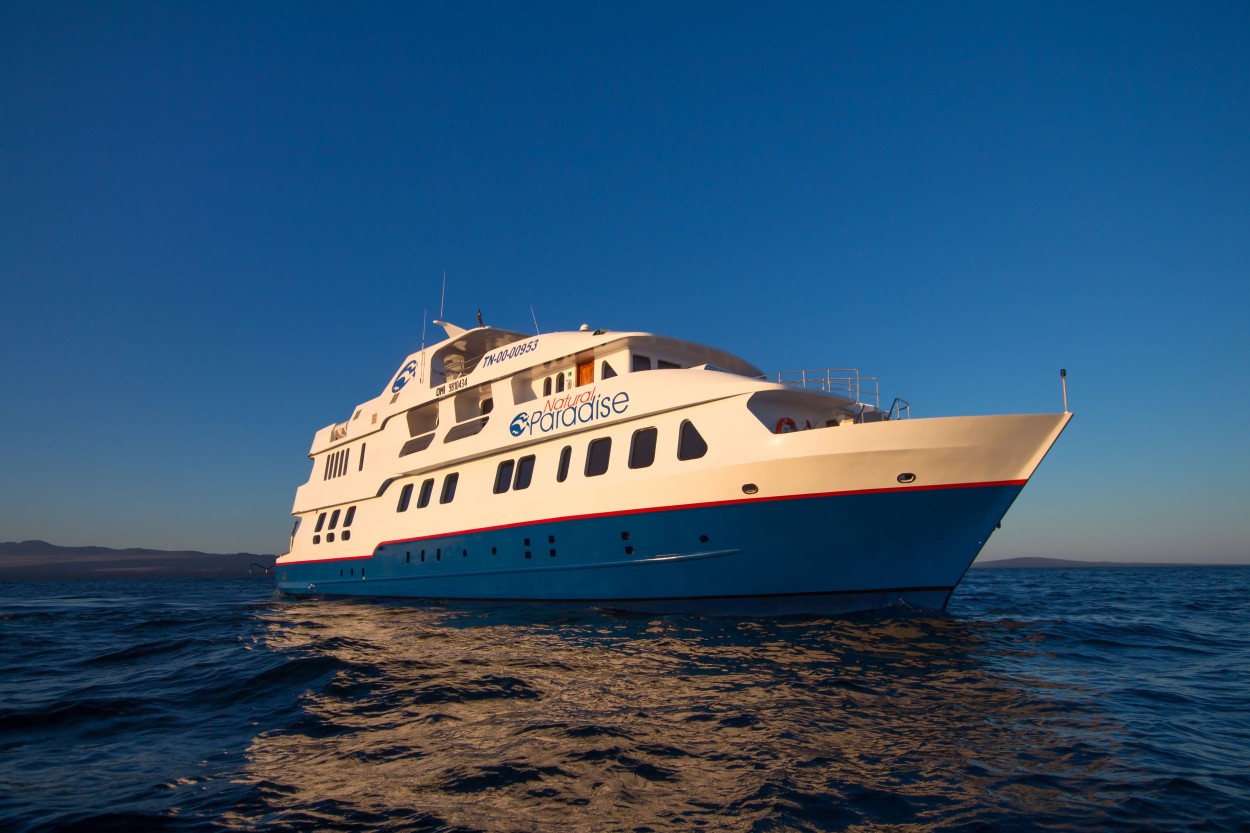
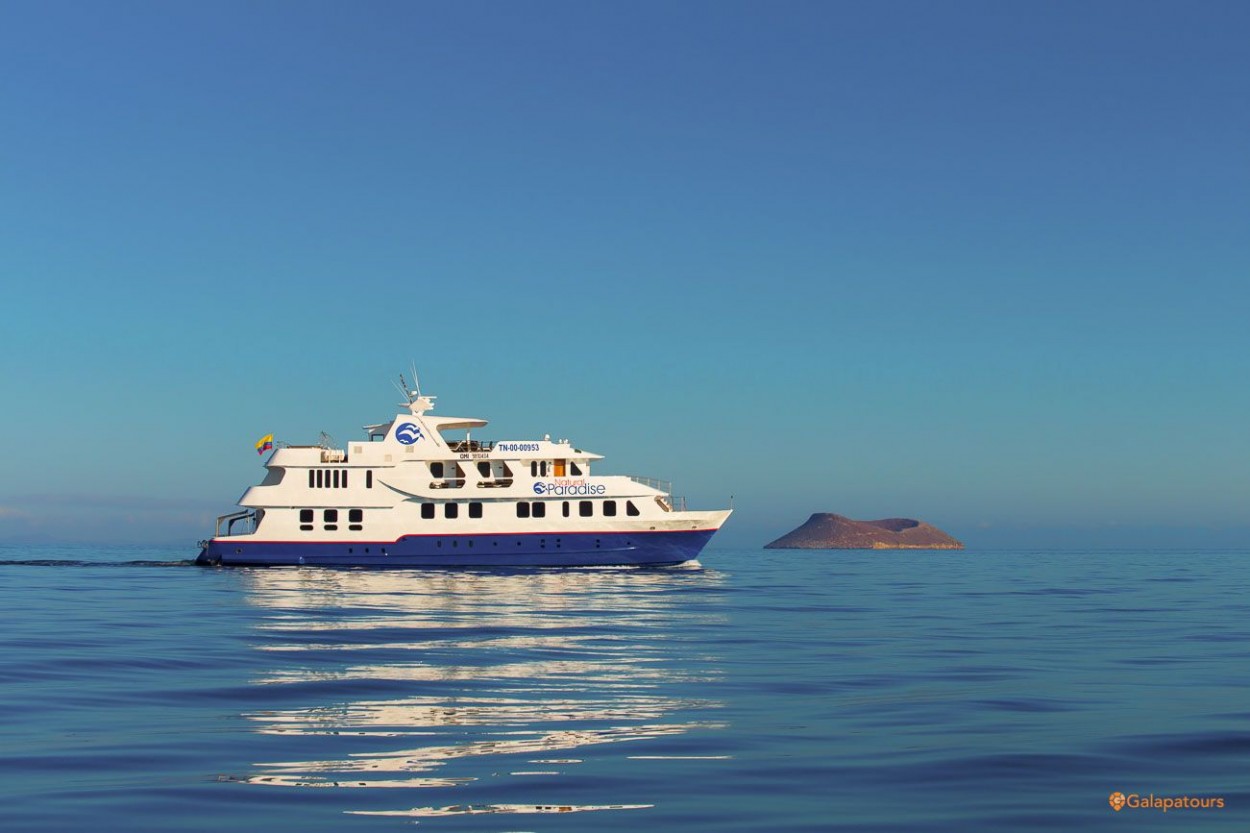
The Natural Paradise Luxury Yacht offers travelers a variety of accommodation options that suit everyone's needs, while always offering the best quality in the overall experience.
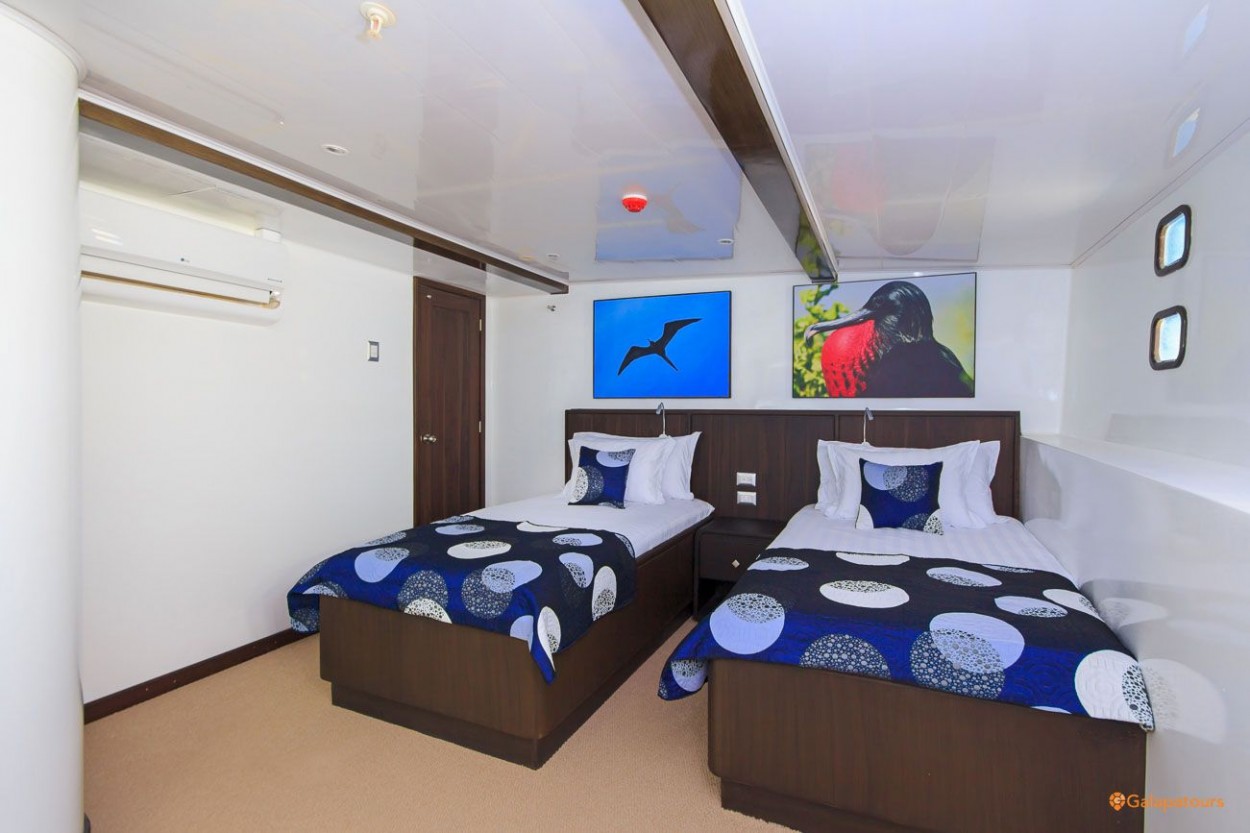
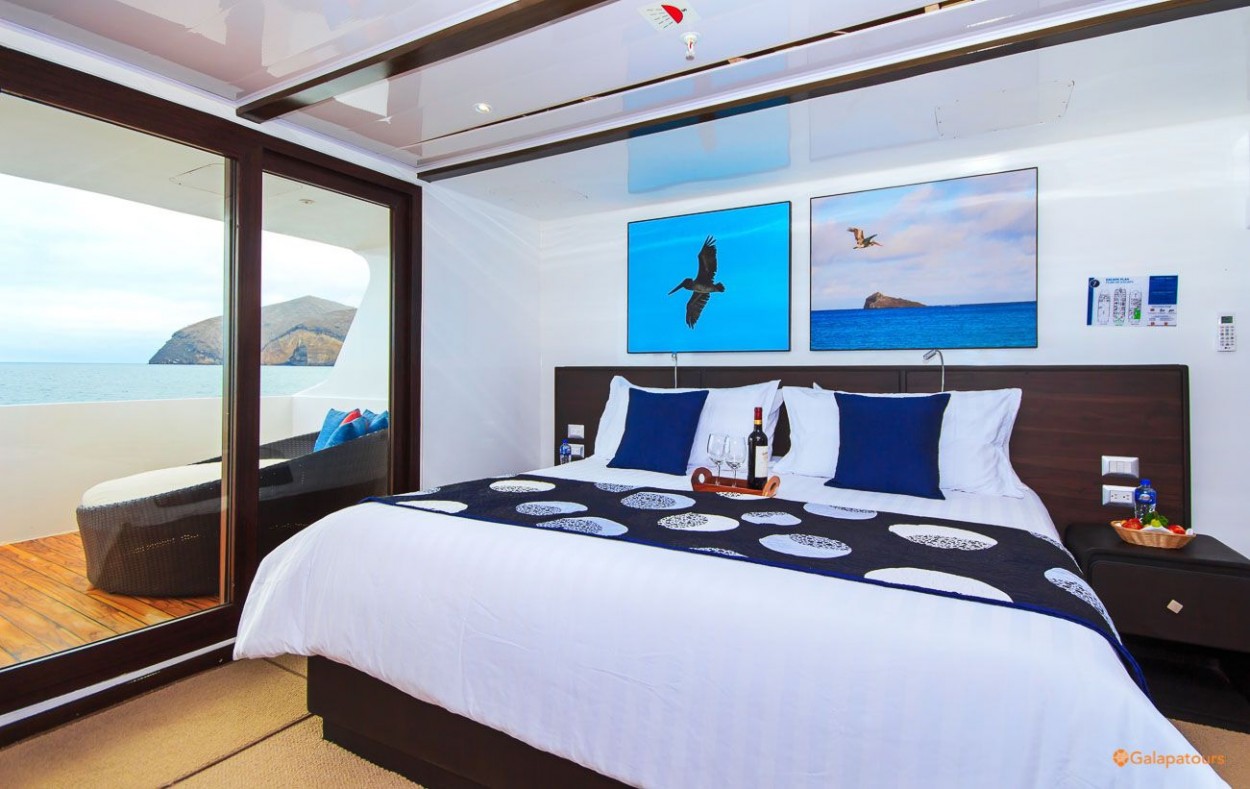
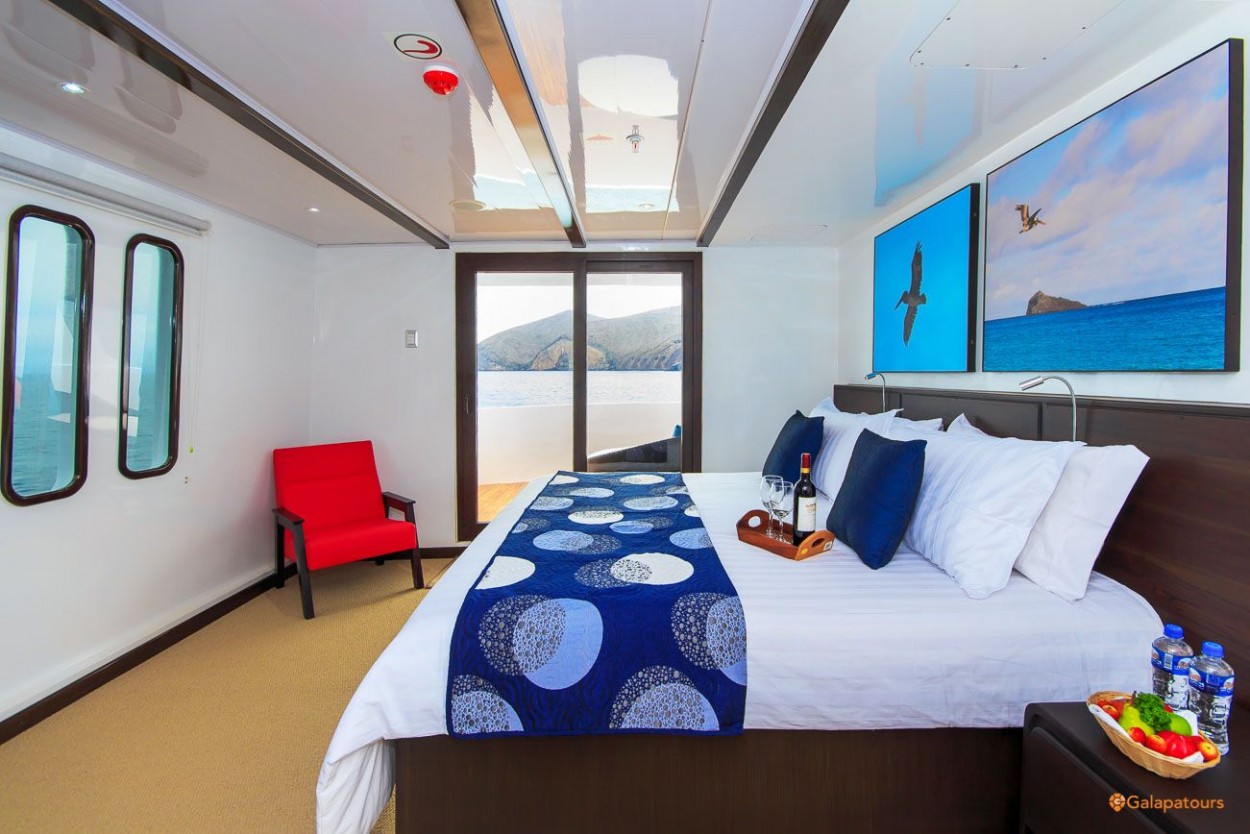
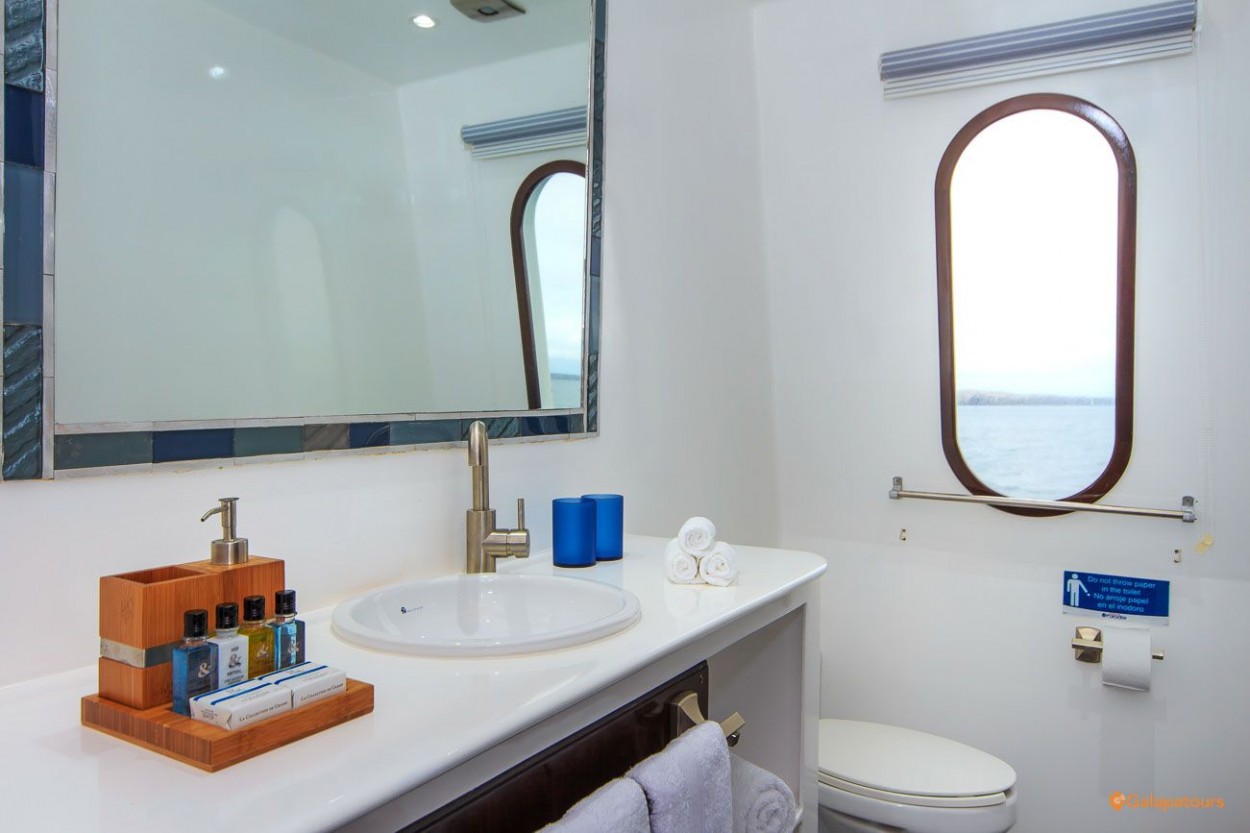
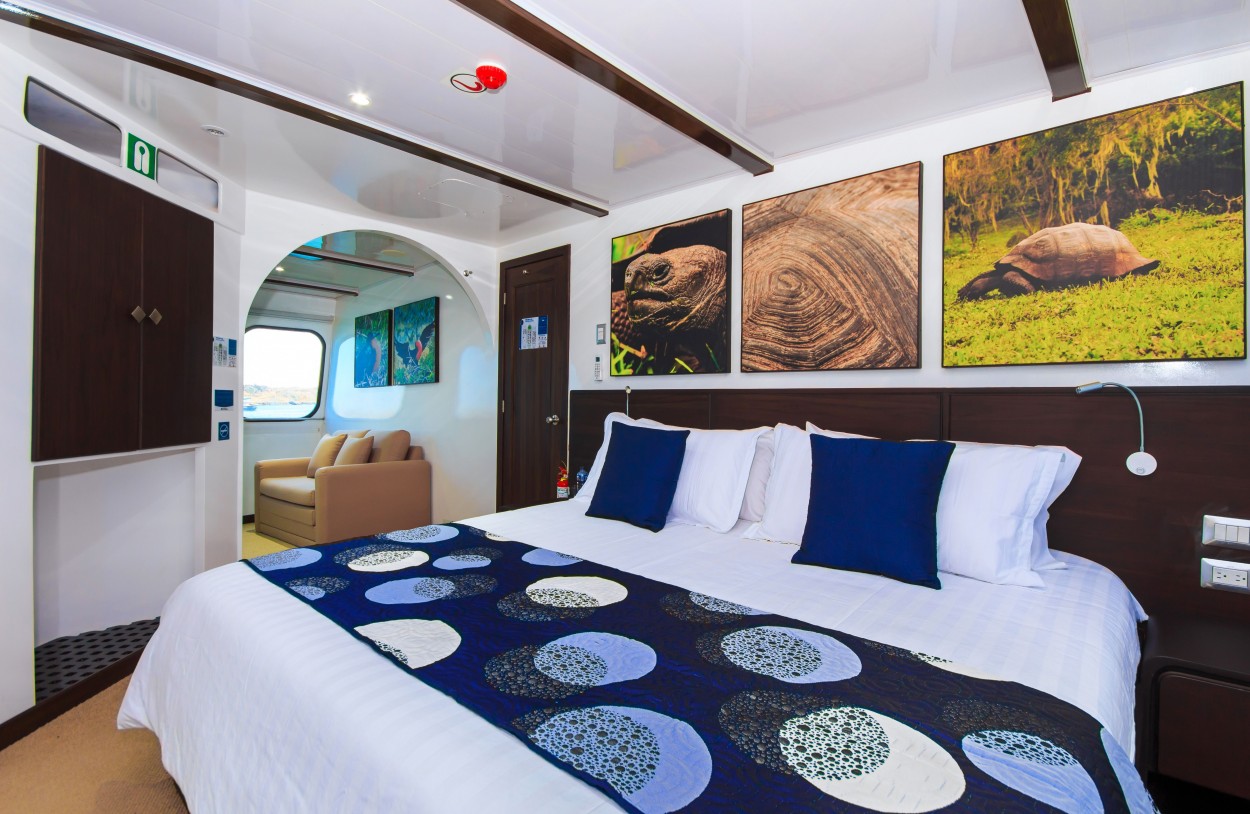
Travelers can pick from 9 different spacious and comfortable cabins that include suites with balconies overlooking the ocean, junior suites, and staterooms, all featuring large bathrooms, air-conditioning, and luxury amenities.
Islands you will visit:
- San Cristobal
- North Seymour
- South Plaza
- Rabida
- Bartholomew
- Santiago
- Santa Cruz
- Genovesa
Itinerary
Itinerary
Tuesday: Arrival in San Cristobal
- AM: Arrival in San Cristobal Airport and Transfer to the boat
- PM: Kicker Rock
- This striking rock formation is located a couple hours off the western shore of San Cristobal. Jutting out of the water, the rocks stand vertically at hundreds of feet above the ocean divided by a small channel. Although there are no landing areas, kayaking and dinghy rides allow visitors to spot a variety of marine life.
- Highlights:
- Sharks, tropical fish, turtles, manta rays (occ.), hammerhead sharks, spectacular rock formations; sea birds: blue-footed boobies, Nazca boobies & frigatebirds.
- Possible Activities:
- Dinghy ride
- Type of Landing:
- No landing
- Difficulty:
- Easy
Wednesday: North Seymour and South Plaza
- AM: North Seymour Island
- Galapagos sea lions, blue-footed boobies and magnificent frigatebirds are abundant on North Seymour Island. The island was formed by a series of submarine lava containing layers of sediment that were uplifted by tectonic activity. The island is characterized by its arid vegetation zone.
- Highlights:
- Land & marine iguanas, frigatebirds, blue-footed boobies, sea lions; snorkeling: rays, reef shark, fish, garden eels.
- Possible Activities:
- Dinghy ride & hiking (1.5 miles / 2.5 km)
- Type of Landing:
- Dry landing
- Difficulty:
- Moderate / difficult
- PM: South Plaza Island
- In the morning, you will head to South Plaza Island. This small island with steep cliffs was formed by rising lava and is now covered by Opuntia cacti. It is also home to one of the largest sea lion colonies as well as colorful yellow and red land iguanas. The most characteristic plant is Sesuvium. During the rainy season its color is a greenish to yellowish tone and in the dry season (end of June through January) a bright red.
- Highlights:
- Land iguanas, sea lion colony, Audubon's shearwaters, swallow-tailed gulls, Nazca boobies, amazing landscape with cliffs
- Possible Activities:
- Hike (1.5 miles / 2 ½ km)
- Type of Landing:
- Dry landing
- Difficulty:
- Moderate
Thursday: Rabida and Barlome
- AM: Rabida Island
- Rabida Island (Jervis) is one of the most colorful and volcanically varied islands in the archipelago and a great snorkeling site. Its famous maroon sandy beach and stunning lookouts provide wonderful landscapes. The island is a birdwatcher’s delight. Some of the rarest species are in abundance, such as nine varieties of finches, large-billed flycatchers, Galapagos hawks and brown pelicans.
- Highlights:
- Snorkeling: white-cheeked pintail ducks, colorful fish, sea lions, brackish water lagoon, penguins, Galapagos hawk
- Possible Activities:
- Snorkeling, dinghy ride & short hike (0.6 miles /1 km)
- Type of Landing:
- Wet landing
- Difficulty:
- Easy / moderate
- PM: Bartholomew Island
- Home of the famous Pinnacle Rock, Bartholomew consists of an extinct volcano with a variety of red, orange, black and even green volcanic formations. A trail of stairs leads to the summit of the volcano, boasting one of the best views of the islands. The beach is perfect for snorkeling and possible sightings of the Galapagos penguin.
- Highlights:
- Pinnacle rock, panoramic view, moonlike landscape, penguins, pioneer plants, lava cactus; snorkeling: penguins, reef sharks, rays, and great colorful fish.
- Possible Activities:
- Dinghy ride, snorkeling & hiking (1.2 miles/ 2 km)
- Type of Landing:
- Dry and wet landings
- Difficulty:
- Moderate/difficult. Walk up to the top of volcano 114 meters, 375 wooden steps
Friday Santiago and Santa Cruz
- AM: Santiago Island: Sullivan Bay
- A coral beach landing leads you towards a lava field as far as the eye can see. Hunt and peck over the two distinguished types of lava, pahoehoe and 'a'a, for signs of plant life that have managed to emerge over the past 100 years since the most recent volcanic explosion. A truly amazing volcanic experience…up close and personal!
- Highlights:
- Variety of lava formations and landscapes, pahoehoe lava which is found primarily in Hawai'i and the Galapagos islands, 'a'a lava, and pristine coral sand beach
- Possible Activities:
- Walk, snorkel, swim
- Type of Landing:
- Wet landing
- Difficulty:
- Easy to moderate. Be sure to wear good solid walking shoes or boots as the 'a'a lava is very sharp and pointy
- PM: Santa Cruz Island: Dragon Hill (Cerro Dragón)
- Situated on Santa Cruz Island, Dragon Hill is one of the newest visitor sites accessible to tourists in the Galapagos Islands. One of the lengthier Galapagos walking trails will lead visitors along a beach and up a trail to the lagoon lookout where bright flamingos, pintail ducks, and land iguanas can be spotted.
- Highlights:
- Land iguana nesting spot, Galapagos flamingos, common stilts, palo santo trees and cacti forest
- Possible Activities:
- Walking and hiking
- Type of Landing:
- Dry landing
- Difficulty:
- Easy to moderate: the trail may get muddy at times, and there is uneven rocky terrain.
Saturday: Santa Cruz Island
- AM: Santa Cruz Highlands
- Reached by bus from Puerto Ayora, the highlands of Santa Cruz are a deep green contrasting beautifully with much of the dry, lower islands. The dominant vegetation in the highlands is the forest of Scalesia trees creating the lush green color. The lava tubes, over half a mile long, are underground and walking through them is a unique, surreal experience.
- Highlights:
- Lava tunnels, wild turtles, tortoises breeding center.
- Possible Activities:
- Hike (1.5 miles/ 2 ½ km)
- Type of Landing:
- Dry landing
- Difficulty:
- Moderate (long)
- Los Gemelos (Twin Craters)
- Los Gemelos, or the Twin Craters, are located opposite each other on both sides of the road leading from Puerto Ayora to Baltra. The name is only figurative; not real craters, these formations were created by the collapse of surface material in underground fissures and chambers. The view is breathtaking.
- Highlights:
- Pit craters, Scalesia forest
- Possible Activities:
- Short hiking
- Type of Landing:
- Dry landing
- Difficulty:
- Moderate
- PM: Fausto Llerena Breeding Center
- You will visit “Fausto Llerena” Tortoise Breeding Center in Puerto Ayora, where giant tortoises are bred in captivity. This is home to tortoises ranging from 3-inches (new hatchlings) to 4-feet long adults. Subspecies of the giant tortoises interact with one another, and many of the older tortoises are accustomed to humans stretching out their heads for a photo opportunity. The babies are kept until they are about four years-old and strong enough to survive on their own.
- Highlights:
- Giant tortoises in captivity
- Possible Activities:
- Walking
- Type of Landing:
- Dry landing
- Difficulty:
- Easy
Sunday: Genovesa Island
- AM: El Barranco
- Also known as Prince Phillip's Steps, El Barranco’s steep, rocky paths leads up to a high cliff-face. A marvelous view can be appreciated from here. This site is also home to palo santo vegetation as well as red-footed boobies, short-eared lava owls, Galapagos swallows, and Galapagos doves.
- Highlights:
- Red-footed boobies, short-eared lava owls, storm-petrels, Galapagos doves
- Possible Activities:
- Hiking (0.9 miles/2 km)
- Type of Landing:
- Dry, difficult landing
- Difficulty:
- Moderate
- PM: Darwin Bay
- This white sand coral beach heads a half mile trail (0.75km) that winds through mangroves filled with land birds. Nazca boobies, red-footed boobies, and swallow-tailed gulls can be spotted here. Further down the path are tidal pools where sea lions swim playfully. At the end is a spectacular view off a cliff.
- Highlights:
- Nazca boobies, red- footed boobies, swallow-tailed gulls, mangroves, coral pebbles beach, snorkeling: rays, colorful reef fish and hammerhead sharks
- Possible Activities:
- Hiking (0.9 miles/1.5 km), snorkeling, kayaking & dinghy ride
- Type of Landing:
- Wet landing.
- Difficulty:
- Easy / moderate
Monday: Santiago Island
- AM: Espumilla Beach
- Espumilla Beach is a popular place for marine iguanas and Sally Lightfoot crabs. The crabs attract the hunting herons performing the dance of predator and prey. With an abundance of marine life including octopi, moray eels, and sharks, snorkeling is highly recommended.
- Highlights:
- Snorkeling
- Possible Activities:
- Snorkeling and swimming
- Type of Landing:
- Wet landing
- Difficulty:
- Easy
- Buccaneer Cove
- Buccaneer Cove is a testament to the fact that Santiago Island was once a refuge for British buccaneers. These pirates would anchor in the protected bay to make repairs and stock up on tortoise meat among other things. The steep cliffs, where hundreds of seabirds perch in front of the dark red sand beach, are a magnificent site.
- Highlights:
- Sea birds, historical site, snorkeling, rock formations
- Possible Activities:
- Short walk along the beach (less than 0.6 miles/1 km)
- Type of Landing:
- Wet landing
- Difficulty:
- Easy
- PM: Egas Port
- Also known as James Bay, Egas Port is home to the curious Galapagos hawks and quick-footed Galapagos lava lizards. The trail leads to a coastline with gorgeous tide pools and grottos full of fauna. Here the Galapagos fur sea lions bathe in the sun. This is also a great snorkeling site.
- Highlights:
- Fur sea lions, Galapagos sea lions, tidal pools and “grottos”, Galapagos hawk, oyster catchers, marine iguanas, finches; snorkeling: reef sharks, turtles, rays, nice underwater formations.
- Possible Activities:
- Snorkeling, hiking (1.2 miles/2 km)
- Type of Landing:
- Wet landing
- Difficulty:
- Easy / moderate
Saturday: Santa Cruz and Transfer to Baltra
- AM: Santa Cruz, Bachas Beach
- Located on the north shore of Santa Cruz, Las Bachas is a swimming beach. One of the few remnants of the U.S. World War II presence in the Galapagos, a floating pier, can be seen here. You may see flamingos, Sally Lightfoot crabs, hermit crabs, black necked stilts, and whimbrels. Sea turtles also nest off the beach.
- Highlights:
- World War II remnants
- Animals:
- Sally Lightfoot crabs, hermit crabs, black necked stilts, whimbrels, sea turtles
- Type of Landing:
- Wet
- Difficulty:
- Easy
- After this tour, transfer to Baltra Airport
Book This Tour
Loading departure information...
Terms & Conditions
Payment Policy:
- At the time of booking a deposit of 20% of the total tour price
- The remaining balance is due a minimum of 65 calendar days prior to departure date
To issue final confirmation Palace tours requires 60 days prior to departure (or at time of reservation for last minute bookings) the following information for all passengers:
- Complete passenger names
- Passport copy
- Nationality
- Date of birth
- Marital Status
- Dietary or medical restrictions
Failure to provide the above information on time may result in delays and possibly passengers missing the tour completely. Palace tours will not accept responsibility or provide refunds if the above information is not provided in its entirety and on time.
Cancellation Policy
All cancellations must be done in writing. If a cancellation is received more than 125 days prior to tour departure date a cancellation fee of 10% of the total price will be retained as cancellation fee.
If a cancellation is received between 125 days and 65 days prior to tour departure date, 20% of the total price will be forfeited.
In the case of a cancellation received less than 65 days prior to the boat departure the full amount will be retained.
*Christmas & New Year: special conditions apply. Please contact us for details.
Inclusions & Exclusions
Rates Include
- All meals throughout cruise
- Transfers in the islands
- All excursions
- Bilingual national park guide
- FREE airport assistance*
- FREE hotel night (1) in Quito or Guayaquil the day before the cruise*
- FREE airport transfer (1) for Galapagos flight*
*Restrictions Apply. Please contact us for more information
Not Included
- Mainland-Galapagos-Mainland airfare
- Alcoholic drinks
- US$100 Galapagos National Park fee
- US$20 Transit Control Card
- Travel / medical insurance
- Tips
- Personal expenses
Frequently Asked Questions & Tips
Since the islands are situated very near the Equator, we recommend that you bring lightweight clothing and of course, don't forget your swimsuits, sun lotion, and good footwear.
It depends from where you depart. Flights to the Galapagos leave from Quito and Guayaquil. It takes about half an hour to get from Quito to Guayaquil and roughly one and a half hours from Guayaquil to the islands.
For the Galapagos Islands there are no required or recommended immunizations. If you, however, intend to spend more time in Ecuador, especially in the jungle, immunization is highly recommended. As this changes from time to time please check with your local health office (or the Institute for Tropical Diseases) a few weeks in advance of your trip.
Most of our cruises will assign double cabins to all passengers unless you want to pay the single supplement if traveling alone. Triple cabins can also be arranged on request, depending on availability and the vessel you choose
The Galapagos Islands are 6 hours behind GMT (equivalent to USA Central Standard Time)
The equatorial line does pass through the Galapagos, just north of Isla Santiago. Please refer to our Itinerary page to see which itinerary passes through the equatorial line.
The Galapagos Islands waters have the Humboldt Current's influence that brings cold waters especially during the mist rainy season (cool weather) from July to December. The warm season is during the months of January to June. The southeast trade winds become weaker and the water from the Panama Basin remains warm. During this season there is more of a tropical climate with some occasional rains. "El Niño" current may cause a much greater flow of warm waters, making the surface warmer and rainfall increase.
Average water temperatures in Galapagos:
January - June: 70°F - 80°F (20°C - 26°C)
July - December: 65°F - 75°F (18°C- 23°C)
Snorkeling equipment is available on-board and is an activity on all of our Galapagos Cruises. All water sports convey a certain risk. Passengers participating in these activities do so under their own responsibility.
*Restrictions and fees might apply, please contact us for more information.
Passengers with special dietary needs are asked to request the latest menu offered and in such cases that stated menu does not meet their needs to clearly convey their specific dietary needs. It is the responsibility of passengers with specific dietary needs to addressed additional requirements at least 30 days prior to the start of the cruise. Those general and specific needs not clearly conveyed cannot be met. Every reasonable effort will be made to cater to such requests within reason, subject to availability of products in Ecuador retains the right to refuse to cater such special needs.