
Take the tour to Santiago de Compostela from Madrid. Experience history, culture and gastronomy of different parts of Spain as you travel while enjoying the beauty of Green Spain. Travel from Madrid to Leon where you can choose to stay at the 5 star parador of Leon that used to be a monastery. Continue on to Santiago de Compostela, the end point of Camino de Santiago.
|
| Destination | Suggested Number of Nights |
Madrid
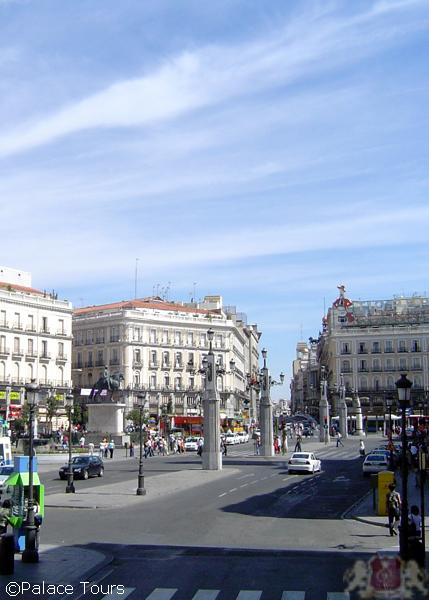
Madrid is the capital and largest city of Spain. The culture of Madrid was dominated by its religious and royal history, evident by enormous, monolithic cathedrals and churches, although nowadays Madrid is just as much a cosmopolitan city as Berlin or London, full of new architecture, life style and nightlife. Madrid is best known for its great cultural and artistic heritage, and is considered one of the top European destinations concerning art museums. Best known is the “Golden Triangle of Art,” located along the Paseo del Prado and comprising three museums, the Prado Museum, the Thyssen Bornemisza Museum, and the Reina Sofia Museum, which is home to Pablo Picasso's Guernica.
|
0
|
León
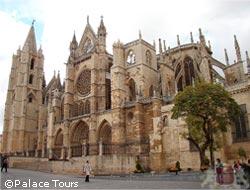
The city of León is the capital of León province in the autonomous community of Castile and León in the Northwest of Spain. León is the last major city along the Camino de Santiago or “Way of St. James”, which makes it common to see pilgrims from all over the world walking through the city. León is especially famous for its gothic cathedral and medieval and Roman architectural legacy, such as the Real Colegiata de San Isidoro, San Marcos, and the Roman wall surrounding the old part of the city which dates back to the 1st century BC. The narrow, almost labyrinth-like medieval streets make the old part of the city remain very true to its original look. The new part stands in stark contrast to the old, full of modern and contemporary buildings such as Gaudi’s Casa de Botines and the new MUSAC, the Castile and León Museum of Contemporary Art.
|
1
|
Santiago de Compostela
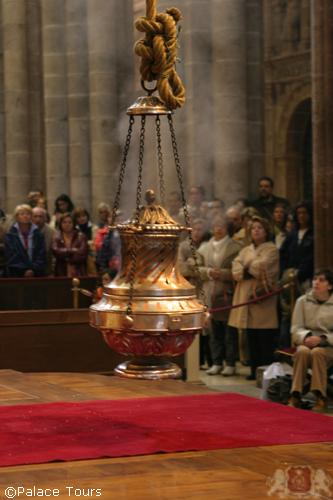
Santiago de Compostela is the capital city of Galicia, Spain, and is the jewel in its historic and medieval crown. The city has world heritage status, and the 9th century Cathedral itself is the final destination for thousands of Christian pilgrims who traverse the "Way of St. James (Camino de Santiago)" pilgrimage across Galicia in order to reach this impressive city and visit the tomb of the saint himself. Santiago’s old town is also full of dazzling examples of Gothic, Neo-classical, Romanesque and Baroque design and nearly all are on a grand or monumental scale.
|
2
|
Zamora
Zamora is the capital of Zamora province in the Castile and León region of northwest Spain. Its city center lies on the north bank of the Douro River, ringed by well-preserved defensive walls and gates. It's known for the Zamora Cathedral, encompassing a Byzantine dome, Romanesque tower and neoclassical cloister. The cloister houses the Museo Catedralicio, with a collection of Flemish tapestries.
|
1
|
Madrid
Madrid is the capital and largest city of Spain. The culture of Madrid was dominated by its religious and royal history, evident by enormous, monolithic cathedrals and churches, although nowadays Madrid is just as much a cosmopolitan city as Berlin or London, full of new architecture, life style and nightlife. Madrid is best known for its great cultural and artistic heritage, and is considered one of the top European destinations concerning art museums. Best known is the “Golden Triangle of Art,” located along the Paseo del Prado and comprising three museums, the Prado Museum, the Thyssen Bornemisza Museum, and the Reina Sofia Museum, which is home to Pablo Picasso's Guernica.
|
0
|
|
|